
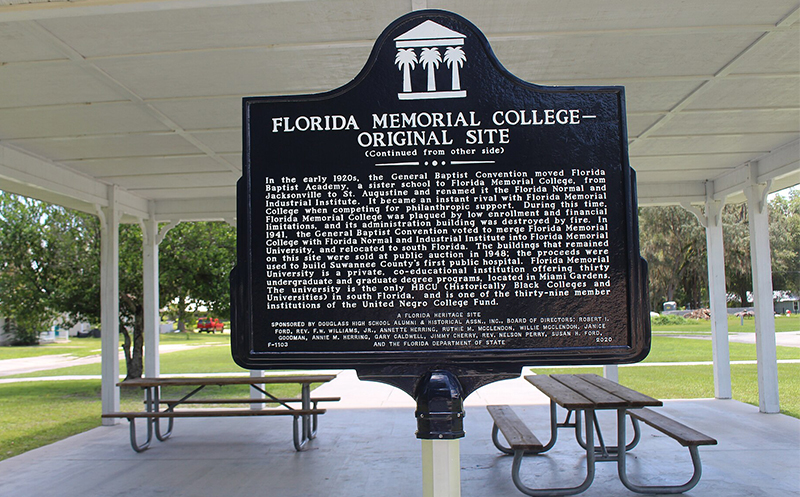
Photo by Michael Rivera via Wikimedia Commons
Florida Memorial University is overhauling its campus security protocols following a brazen sexual battery on its Miami Gardens campus that has left students questioning their safety. The incident, which involved an attacker reportedly jumping a campus wall, has sparked intense scrutiny of the university’s existing safety measures. While Miami Gardens police have since arrested a suspect, the event has forced a campus-wide reckoning over institutional responsibility and what it takes to keep students safe.
A Brazen Attack and a Campus on Edge
The incident shattered the sense of security at the historically Black university in the early hours of a Sunday morning. According to police reports, the victim, an international student from Colombia, was returning to campus from a bus stop when she was followed by a man later identified as 30-year-old Steve Rives.
In a shocking security lapse, after a campus officer checked the victim’s ID at a gate, Rives allegedly bypassed the checkpoint by simply jumping a wall. He then pursued the student, pinned her against a building door, and sexually battered her before fleeing the scene. The attack’s audacity left the campus community reeling, with students voicing immediate concerns.
“People are able to come into buildings easily, come into campus easily, and it really makes me nervous for the safety of the campus,” one student told WSVN, highlighting a perceived lack of visible security before the incident. This student outcry became the catalyst for the administration’s swift response and a manhunt by the Miami Gardens Police Department.
Police initially circulated a description of a Black male in a black hoodie. Thanks to tips from the community and DNA evidence, authorities arrested Rives. His violent behavior was further underscored when he allegedly attempted to assault a female detective while being transported, adding more charges to his name.
More Guards, ID Checks, and Lingering Questions: Inside FMU’s Security Overhaul
In response to the attack and mounting pressure from students and parents, Florida Memorial University’s administration quickly rolled out a series of enhanced security protocols. The university president announced the changes, aiming to restore confidence and fortify the campus perimeter.
The new safety plan includes several key measures:
- Deployment of additional security personnel across campus, with a heavy focus on all entrances.
- Stricter enforcement of identification verification for every individual seeking to enter the campus grounds.
- Increased high-profile patrols by both campus safety officers and the Miami Gardens Police Department to create a more visible deterrent.
- Planned improvements to campus infrastructure, including better lighting and upgraded surveillance systems.
While these steps represent a tangible response, they also raise pressing questions. Does a stricter ID check at the front gate truly matter if an intruder can just hop a wall a few hundred feet away? The incident exposed a vulnerability in the physical perimeter, a problem that more guards at official entry points may not fully solve. For a campus trying to reassure its students, addressing the walls themselves remains a critical, unanswered question.
The Legal Fallout: A University’s “Duty of Care” Under the Microscope
The attack at FMU brings a critical legal principle into sharp focus: an institution’s duty of care. Under Florida law, universities and property owners have a legal obligation to provide reasonable security measures to protect students and visitors from foreseeable criminal acts. When they fail, it can be considered negligent security, opening the door to legal liability.
Foreseeability can be established by prior crimes in the area or known security vulnerabilities, such as broken fences or a history of trespassing. An institution can’t just ignore risks and hope for the best. Below is a breakdown of what separates adequate security from potential negligence.
| Adequate Security Measures | Potential Security Negligence |
|---|---|
| Functioning perimeter fencing and controlled access points. | Broken fences, unlocked gates, or areas where access is easily bypassed. |
| Sufficient lighting in walkways, parking lots, and near buildings. | Poorly lit areas that can conceal criminal activity. |
| Visible and active security patrols, especially at night. | Inadequate number of guards or patrols that are infrequent or predictable. |
| Properly functioning security cameras in key locations. | Broken cameras or a lack of surveillance in high-risk areas. |
| Secure access to residential buildings (key cards, scanners). | Unsecured dorms or buildings that allow for easy unauthorized entry. |
Proving an institution breached its duty of care is a complex legal battle requiring specialized expertise. Similar complexities arise in other high-stakes personal injury cases, from medical malpractice to catastrophic vehicle accidents.
For instance, holding trucking companies accountable after a crash involves navigating a maze of federal regulations and aggressive insurance tactics, which is why victims often seek out specialized Miami semi truck collision lawyers to fight for their rights. In any case of negligent security, whether on a campus or a highway, the principle remains the same: victims deserve compensation when a failure to provide reasonable safety leads to foreseeable harm.
Beyond the Arrest: A Push for Safe Campuses
While the arrest of Steve Rives brings a measure of relief to the FMU community, the attack has served as a harsh wake-up call. The incident exposed vulnerabilities that have ignited a critical conversation about the real cost of security lapses on college campuses across Miami and beyond. For students at Florida Memorial University, the push for a truly secure environment is just beginning, and their calls for accountability are echoing louder than ever.